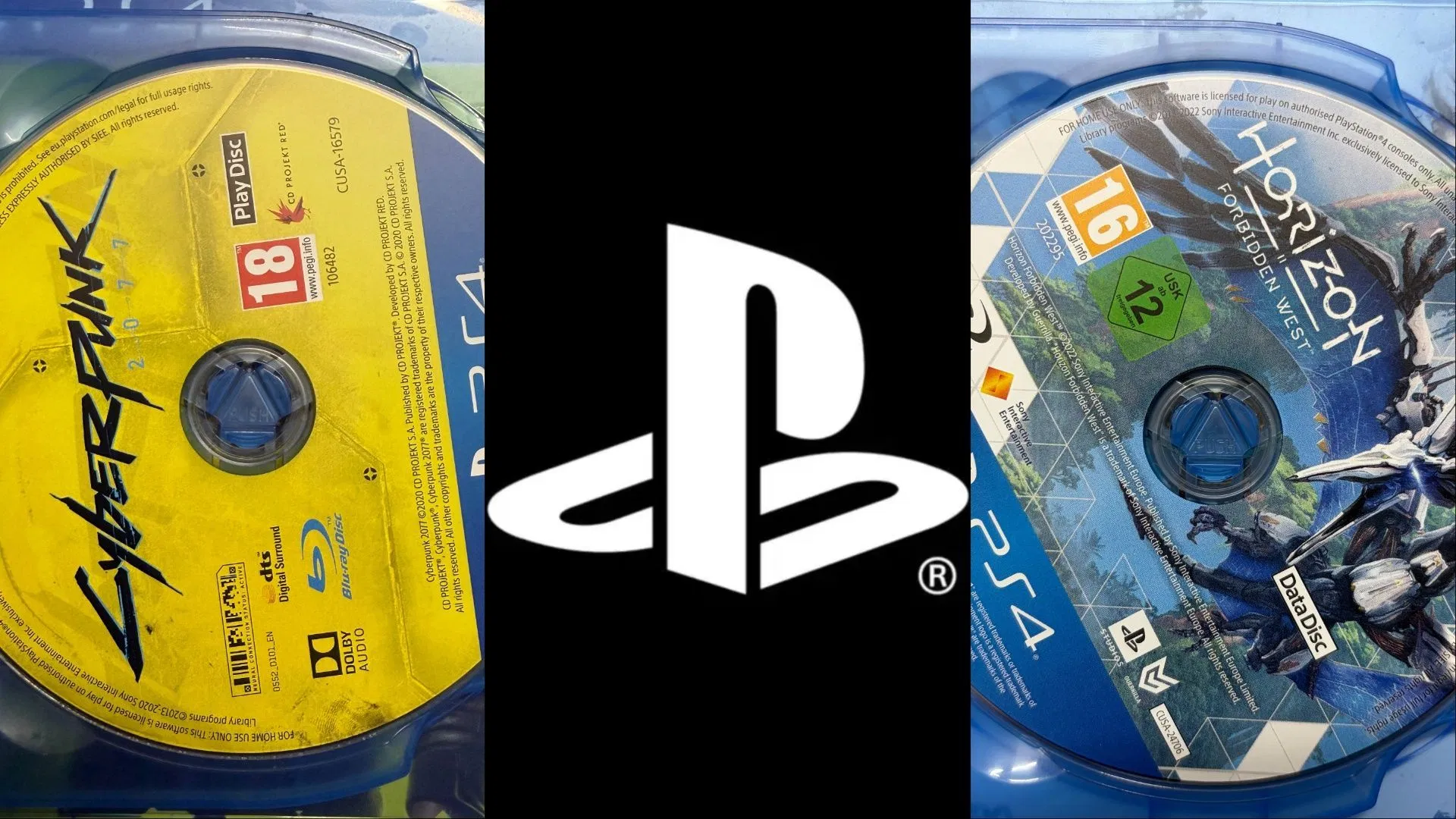
PlayStation’s no-disc move cites “consumer trends”, asks you to trust them while showing you probably can’t

It should not come as a surprise that PlayStation suddenly decided to terminate production of physical discs for games on the console. Game prices are ever-rising, console prices are ever-rising, and it is also clear that they are not going down in the near future. In the middle of that, if they could just stop producing physical discs altogether and go entirely digital, why would they not?
They cut down entirely on whatever amount of money they were having to invest in making these physical discs. They can just push gamers to pay for only digital licenses (licenses, as you only get them and not ownership after paying full price) and cut out the need for any other complications.
They also would likely not need to invest in making disc versions of their upcoming consoles for the base version and rather provide a disc drive that needs to be separately purchased. With Sony saying they will no longer subsidise their console prices, one can only imagine what PS6 will cost at launch.
And they can do all of that in one broad, swift sweep and turn almost a blind eye to the outrage that follows. Sony is (likely) too big to care to make a U-turn on that decision. I wholeheartedly hope I am wrong in that assumption, but I hear that it has already been decided that the workers in their CD production plant in Thalgau, Austria, are going to be retrained in producing microlenses (ORF Salzburg reports).
Physical gaming on PlayStation is heading towards an ignominious death in January 2028, and there does not seem much we can do about it. But does the data support the notion that people are not buying physical discs? That does not seem to be the case.
The common adage of “if buying is not owning, then pirating is not stealing” resurfaces as Sony signs the death warrant of PlayStation physical games
Let me preface the heading by saying I, in my capacity as a Sportskeeda journalist, am neither supporting piracy nor suggesting to the readers that they should engage in it. I am merely citing the sentiment that it embodies while not endorsing the conclusion it comes to.
I appreciate the nuances for those who pirate games and am aware that it is stealing products/services and not paying for them. Having said all that, the consumer grumble that is reflected within that phrase is the part where your purchase of a product can be superseded if a company decides to revoke your access to the game. Valve CEO Gabe Newell aptly put it back in 2011:
“Piracy is not a pricing issue. It’s a service issue. The easiest way to stop piracy is not by putting antipiracy technology to work. It’s by giving those people a service that’s better than what they’re receiving from the pirates.”
Let’s say you digitally purchased a game on the PlayStation Store. Some years later, Sony decides to pull the game from the store for whatever myriad of reasons. You will no longer be able to access the game even though you paid for it. Thus, the service issue will force you to find better alternatives than this state, where it is always possible that the next day, your access may be revoked.
With a physical disc, you could technically still play the game if you kept your console offline. The mechanics of forcing an online check, even when starting certain single-player games, counter this, but gamers have always pushed back against such “always-online” practices.
Now that PlayStation is stopping physical discs, gamers will have to rely only on the digital, and therein lies the problem. Are we worrying unnecessarily here? Probably not. This becomes starkly evident given that Sony’s decision came on the heels of over 500 movies being removed from the PlayStation due to an expired licensing deal.
What happens if someone has purchased one of those movies? Basically, tough luck: they lose access and get nothing in return. The Stop Killing Games movement was born in 2024 in response to Ubisoft pulling the plug on The Crew (2014) and even single-player elements becoming unplayable, as the title requires a constant internet connection.
If digital licenses as such are then revocable, then why not advertise the same boldly? I am sure that in some fine print, Sony does mention their right to revoke access to products you fully pay for as you are making the purchase, but a more ethical and clearer message would be to simply say “Rent” for all such products. It may not have the same appeal, but it will at least reflect the reality of the situation better.
Do physical discs not sell for PlayStation?
Returning to what I said in the introduction, the decision to shutter discs would make sense if this generation of video gamers had stopped purchasing physical discs of video games. PlayStation’s official announcement assures the following:
“This is a natural direction for Sony Interactive Entertainment to adapt to consumer trends as the general preference for digital media significantly outpaces physical discs. This transition will enable us to align more closely with how most of our community prefers to access and play games today.”
There is plenty of debate being waged on social media currently regarding exactly how many physical discs PlayStation sells and whether the numbers are heavily skewed towards digital. I saw numbers as high as 80% being quoted in favor of digital sales (Ampere Analysis reports).
Countering that narrative, @nib95_ (who identifies themselves as a gaming fan and an entrepreneur) on X provides a long analysis going through data from 2022 from a major leak (where physical discs were preferred) and then discussing how Sony represents physical and digital revenue figures. On the latter, the account states:
“PlayStation actually has DIFFERENT revenue reporting criteria for physical and digital software. For PHYSICAL software revenue, they report FULL first-party physical sales but ONLY the royalty cut (~15%) they make on third-party physical sales. For DIGITAL software revenue, however, they report FULL first-party digital sales and also FULL third-party digital sales, NOT the ~30% royalty cut they actually make. So they are reporting boosted revenue figures ONLY for digital.”
The 15% and 30% royalty cuts are reported to be the standard (another post mentions the same), with some developers/publishers negotiating a lower fee. The X post continues:
“This is what they’re doing in their official financial reports, making digital revenue look much stronger than it actually is vs physical revenue, by reporting the royalty cut ONLY for third-party PHYSICAL revenue, but full game sales for third-party DIGITAL revenue, which misleadingly massively skews revenue in favour of digital.”
The argument has been reported previously on social media, every time there have been conversations about Sony’s digital and physical sales. I checked Sony’s financial results for the fourth quarter that ended on March 31, 2026, where the fine print states:
“Physical Software is revenue from first-party game software for PlayStation consoles sold on discs to retailers, royalties from third-party software sold on discs and revenue from first- and third-party game software sold bundled with PlayStation consoles and PlayStation VR. Digital Software is revenue from full game downloads of both first- and third-party titles sold via the PlayStation Store.” (emphasis mine)
@nib95_ illustrates the issue with the example of PlayStation selling a hypothetical case of 10x$70 physical and digital Resident Evil Requiem copies each. In the current official format, the physical revenue will be $105 (10x (15% of $70)), and the digital revenue will be $700. If only royalty is considered, the physical revenue will be $105 and the digital revenue will be $210. The difference still exists, but is less than what is officially reported. The disparity in how these two categories are reported in the financial report will cause one to look better than the other multifold than it should.
In the May 8, 2026, official report (linked before), Sony mentions the following for FY25 in segment sales breakdown in millions of yen:
- Game Software – 2,641,023
- Physical Software – 125,106
- Digital Software – 1,055,688
- Add-on Content – 1,359,617 (revenue from digital content like “in-game currency, in-game items, and expansion packages”)
- Other Software – 100,612 (revenue from sales on “platforms other than PlayStation consoles”)
The data shows that add-on content (signalling largely live-service games) outsells both physical and digital software and indicates where Sony’s prioritisation would likely lie in the future. One must also factor in that a large number of these games do not even have a physical counterpart and are only sold digitally. Revenue generated from them will increase the numbers without providing a fair comparison.
Why physical discs are important
One may ask why physical discs are important when a significant number of gamers are availing themselves of fast internet, while some even preferring the digital-only PS5 console. The argument that physical discs are collector’s items, help in preserving/archiving games, and are beloved by many may also fall flat as the practice may be seen as not practiced by the larger masses.
What physical discs inevitably do is allow for the rebuying/reselling of the games into the third-party market, where others can rent/purchase them at a lesser price point and enjoy the game. There are still facilities that rent you PS5 games so that you can enjoy the game without having to break the bank. I get reminded of the hilarious “instructional video” PlayStation put out for the previous generation on how to share games on PS4: simply by handing over the disc to the other person.
Once January 2028 hits, you can no longer sell physical disks of games you have already completed to fuel your next purchase. PS game prices are steadily increasing, with GTA 6 cracking the $80 USD mark on the Standard Edition. The PS Store is also not known for being lenient with refund options (Steam seems to be the gold standard in that matter). PlayStation single-player games will also not be appearing on PC for the foreseeable future. And if there is no disc option for the PS6, you will have to hold on to your PS5 if you already have physical disc games.
Where do we go from here?
Consumer ownership seems like a fading dream that you, as a consumer, have to pay for while having no control over it. The recent hue and cry for a GTA 6 physical disc version shows that there is still a strong market for physical disc releases. I regularly come across readers asking whether a certain edition of an upcoming game will include a disc or only a code within the box.
While I do not doubt that there is an uptick in digital sales, the decision to entirely do away with physical discs is not merely about adapting to consumer trends but carries a stench of accelerating a digital exclusivity that likely helps their bottom line more than being consumer-friendly.
Sony is implicitly asking you to trust that they will surely not do an anti-consumer rug pull and take away your purchased games when you hit that “Order and Pay” button, while their actions show that they might just do that, and there is not much you can do about it. Hideo Kojima mentioned in an X post in August 2021:
“Eventually, even digital data will no longer be owned by individuals on their own initiative. Whenever there is a major change or accident in the world, in a country, in a government, in an idea, in a trend, access to it may suddenly be cut off. We will not be able to freely access the movies, books, and music that we have loved.”
The future of media consumption has been steadily pushed towards being exclusively digital for quite some time now. While there is definitely the ease factor playing into it, I often find myself frustrated at movies disappearing from one OTT and popping up on another, or licenses/rights changing hands, which leads to my access being revoked even after I purchased the product.
I am constantly forced to subscribe to all streaming services to have a better chance of finding what I want to consume. On top of that, a company may decide to add new ad-filled tiers, asking you to pay more for an ad-free tier, even after you have already paid for the full subscription.
Will gaming enter a similar realm? Gordon Gekko says, “Greed, for lack of a better word, is good”. We always already seem to know for whom.
Are you stuck on today’s Wordle? Our Wordle Solver will help you find the answer.
Edited by Angshuman Dutta




Post Comment